Jun 15, 2026
Using AI Photo Analysis to Catch Issues Before They Become Expensive
-
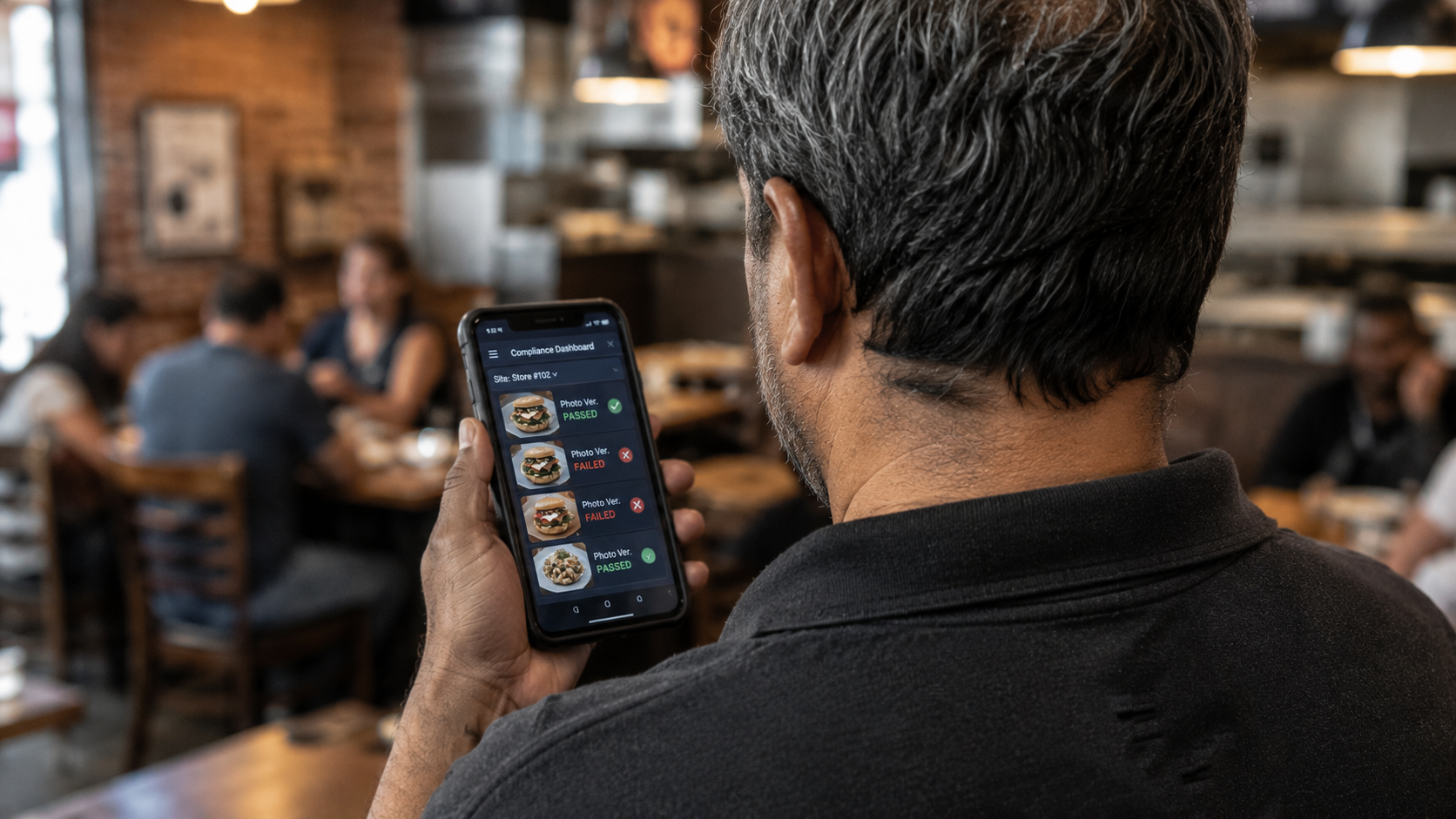
A missed equipment check. A freezer door left slightly open. A prep station that doesn't quite meet standards. These aren't dramatic failures, but left unnoticed, they add up fast. For multi-unit operators, the real cost isn't just one bad inspection or one unhappy guest. It's the compounding effect of small issues that no one caught in time. That's exactly where AI photo analysis is changing how operations teams work.
Key Takeaways
- AI photo analysis helps multi-unit operators catch compliance and quality issues before they turn into costly problems.
- Manual inspections are inconsistent by nature, and human error leaves gaps that technology can fill reliably.
- Automated photo verification removes guesswork from daily operations and ties accountability directly to real-time data.
- AI-powered tools like OpsPhotoAnalyzer are purpose-built to reduce labor hours while improving the accuracy of on-site audits.
- Platforms like OpsAnalitica bring photo analysis into a broader operations execution system for consistent, scalable results.
The Limitations of Manual Inspections
Even with a dedicated team, manual inspections lack consistency across multiple locations. Relying on memory and varying standards creates a weak foundation for large-scale operations. Food safety failures typically stem from these small, recurring gaps, like missed checks or rushed walkthroughs, often caused by outdated systems that cannot keep up with modern operational demands.
Photo-based verification addresses these gaps by replacing simple checkboxes with documented visual proof. When paired with AI, the system automatically flags inconsistencies, removing the need for managers to manually review every image.
The hard truth is that food safety failures rarely come out of nowhere. They're the result of small gaps that repeated themselves until something went wrong. Missed checks, incomplete logs, and rushed walkthroughs are the norm in understaffed environments. The issue isn't that teams don't care. It's that the systems they're using weren't built for the pace of modern operations.
That's where photo-based verification fills a real gap. When employees are required to submit photos as proof of task completion, there's a documented record instead of a checkbox. And when those photos are analyzed by AI, the system can flag inconsistencies automatically, without waiting for a manager to review each image manually.
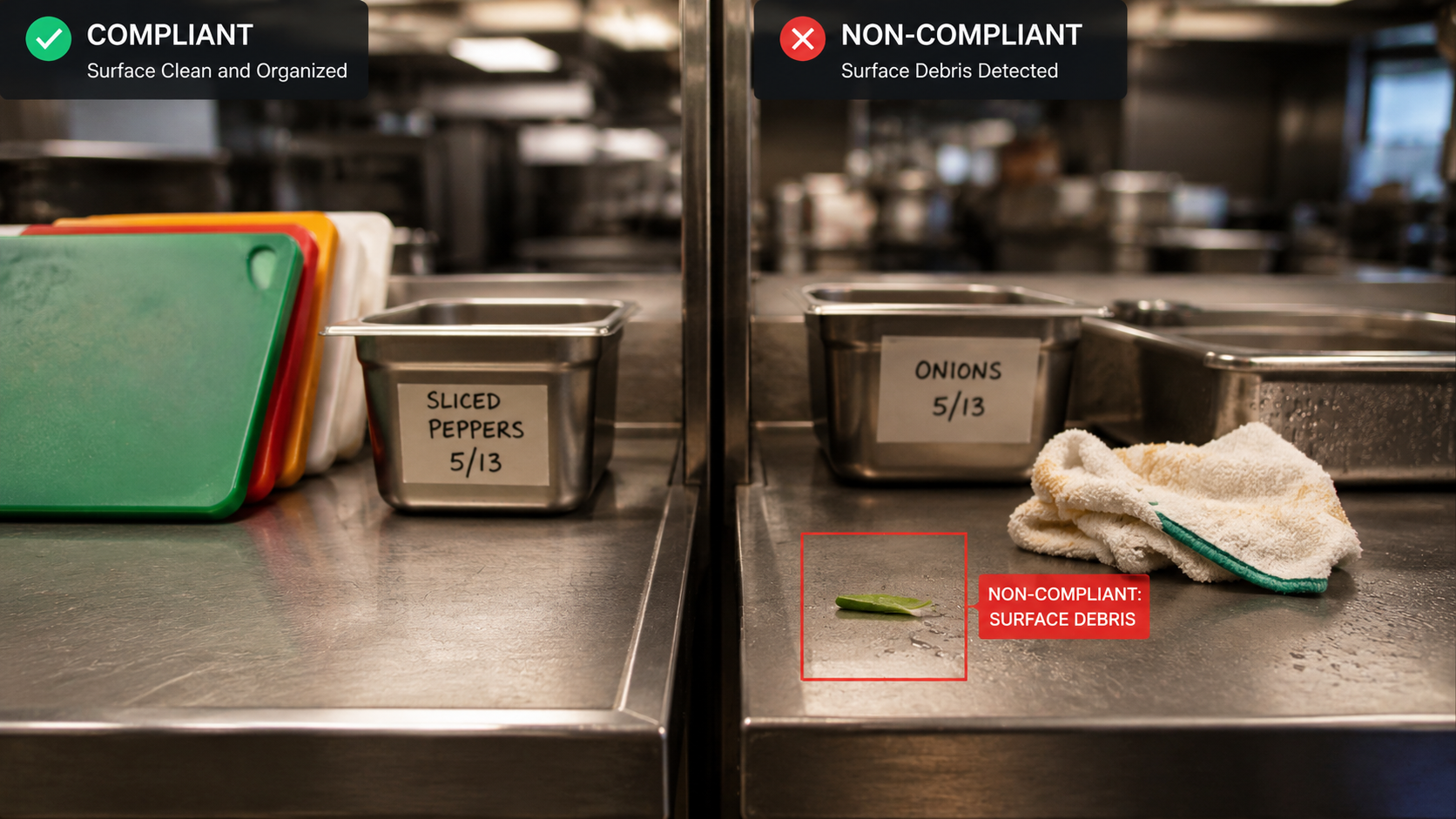
How Automated Photo Verification Prevents Costly Compliance Failures
How AI Photo Analysis Actually Works in Operations
The concept is straightforward. An employee takes a photo of a completed task, like a stocked display case, a sanitized prep surface, or a temperature log on a cooler. That photo gets submitted through the operations platform, and AI-powered visual inspection technology analyzes it against predefined standards. If something is off, an alert goes out before a guest, inspector, or executive ever sees the problem.
This isn't just about catching mistakes. It's about creating a culture of accountability that's backed by real data. Automated photo verification removes the ambiguity from inspections. A photo either passes the standard or it doesn't. That removes the subjectivity that makes manual audits unreliable across locations.
This approach also fits into the broader AI trends transforming the food industry. Restaurant groups and hospitality brands are moving toward real-time verification tools specifically because reactive systems just aren't enough anymore.
If your operation still relies on manual walkthroughs to stay compliant, OpsAnalitica's photo verification tools can reduce your compliance risk before it turns into a liability.
What OpsPhotoAnalyzer Does That Manual Review Can't
OpsAnalitica built OpsPhotoAnalyzer specifically to take photo review off a manager's plate without losing any of the oversight. Instead of a manager manually scrolling through dozens of submitted images each shift, the AI does the first pass automatically. Managers see flagged items, not an inbox full of routine confirmations. That shift alone recovers meaningful time, which can go toward coaching, planning, or higher-value work.
The platform uses AI-powered photo verification to evaluate each submission in real time. That means issues get surfaced immediately, not hours after the fact when corrective action is no longer practical. For multi-unit operators running lean teams, this kind of automated triage is the difference between staying ahead of problems and reacting to them.
AI handles the initial photo review and flags only issues, allowing managers to focus on coaching and planning. Real-time analysis helps teams fix problems faster, while creating standardized quality checks, audit trails, and performance insights across locations.
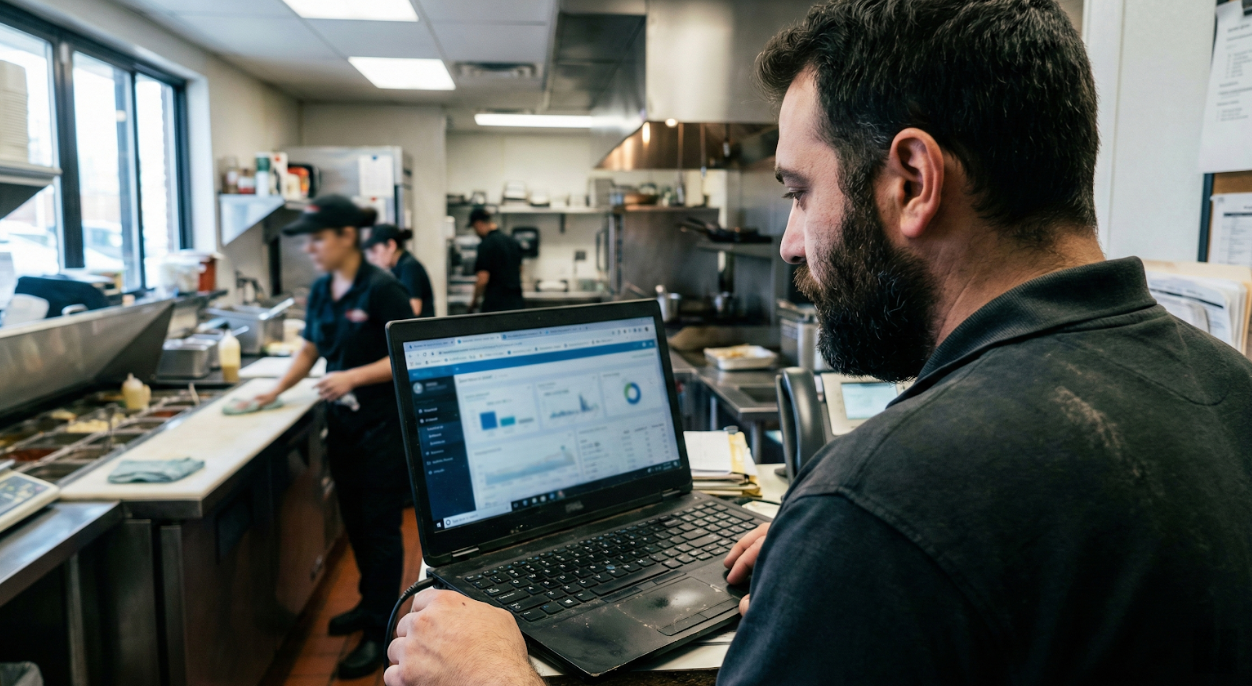
How OpsPhotoAnalyzer Frees Up Managers to Focus on Higher-Value Work
Integrating Operations Execution
Photo analysis works best when combined with a system that tracks tasks and connects field activity to business outcomes. OpsAnalitica integrates inspections into daily operations, giving teams real-time feedback and leadership better visibility across locations. Users report 3 to 4 percent labor cost reductions and stronger compliance by replacing manual paper-based processes with consistent automation.
For operators who want to build that kind of consistency into their daily workflow, For operators who want to build that kind of consistency into their daily workflow, OpsAnalitica's operations execution solution gives teams the structure to enforce standards at scale, with photo verification built in as a core part of the process.
The Cost of Delayed Detection
Every operation has a critical threshold: issues caught early are fixable, but delayed detection leads to expensive consequences like failed inspections, guest complaints, or inventory loss. AI photo analysis moves this threshold earlier, ensuring problems are resolved before they escalate into significant liabilities.
With proven technology available, the priority for multi-unit operators is determining if their workflow enables proactive prevention or merely documents failures after the fact. This distinction defines the difference between sustained operational success and costly reactive firefighting.

Ready to Improve Your Operations?
Get our FREE checklists to streamline processes, boost efficiency, and save time.