Aug 24, 2026
How Franchise Operators Use OpsPhotoAnalyzer to Enforce Brand Standards at Scale
-

A franchise brand can spend years building a reputation, then watch it slip at the location level when no one is physically there to check the details. Multi-unit operators know the pattern well. A manager skips a step during a rush, a shift lead forgets to log a temperature check, or a cleaning task gets marked done without actually happening. OpsAnalitica built OpsPhotoAnalyzer to close that gap, giving operators a way to confirm that brand standards are being met at every location, not just assumed.
Key Takeaways
- OpsPhotoAnalyzer lets franchise operators verify task completion with photo evidence instead of relying on self-reported checklists.
- The tool helps catch brand standard gaps before they turn into guest complaints or failed inspections.
- Franchise groups using photo verification report meaningful labor savings from reduced manual follow-up and rechecking.
- OpsAnalitica ties photo data to specific tasks, locations, and time stamps for a clear audit trail.
- The platform works across restaurants, retail, and other multi-location businesses that need consistent execution at scale.
Why Brand Consistency Breaks Down Across Locations
Every franchise agreement is built on a promise. Whatever city or state a customer walks into, the experience should feel the same. That promise gets harder to keep as a brand grows past a handful of locations.
Franchise operations depend on dozens of small, repeatable actions completed correctly every shift, and most of those actions happen with no corporate representative in the room. A checklist gets filled out because someone remembers to fill it out, not because the task was actually verified. Over time, small gaps compound into inconsistent food quality, uneven cleanliness, or missed safety steps that put the whole brand at risk.
Self-reported checklists were never built to catch that kind of drift. They record that a box got checked, not whether the underlying task actually happened the way it was supposed to.
The gap shows up in places beyond compliance too. A limited-time offer needs the same display, portioning, and setup at every store to land the way marketing intended, and a regional rollout only works if headquarters can actually see that each location executed it correctly instead of hoping for the best.

How OpsPhotoAnalyzer Verifies Standards in Real Time
This is where OpsPhotoAnalyzer changes the equation. Instead of trusting a paper form or a tap on a screen, the tool requires a time-stamped photo tied to a specific task, whether that's a clean prep station, a properly stocked display, or a completed safety check. Digitizing that verification with OpsAnalitica gives multi-unit teams a real record of what happened at each location, not just a claim that it happened. Teams get that record inside a broader operations execution solution designed for multi-location accountability.
The platform builds on scalable checklists that adapt as a brand adds locations, so a five-store operator and a two-hundred-store operator can run the same verification process without reinventing it for every new market.
Operators who want to see how photo verification fits their specific footprint can start with the resources built for multi-unit franchise industries, which cover setup, rollout, and common pitfalls.
Labor Savings and Execution Discipline
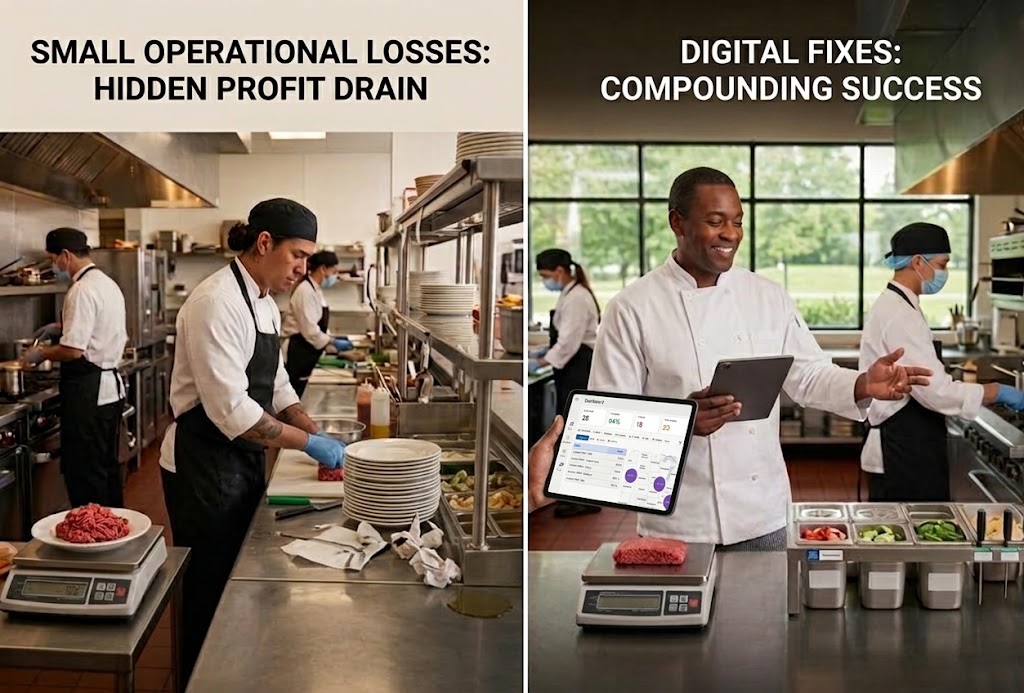
The financial case matters as much as the operational one. Clients running OpsAnalitica across their locations report labor cost reductions in the three to four percent range, along with roughly five thousand dollars a week in savings tied to better time management alone. That adds up fast across a franchise system with dozens or hundreds of units.
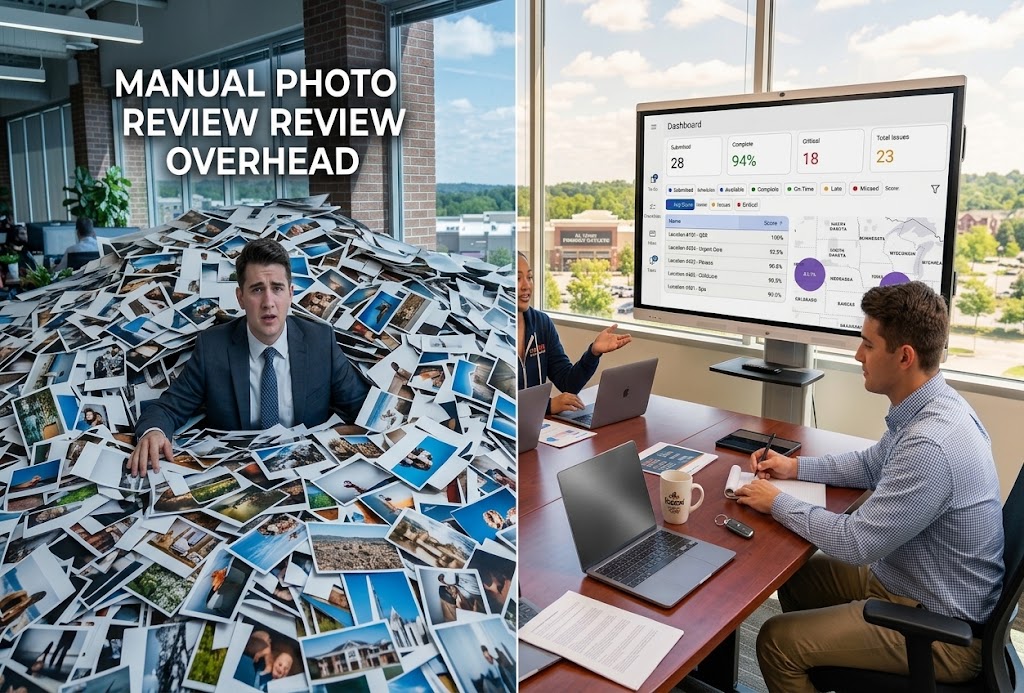
Photo verification also cuts down on the invisible labor cost of double checking work. When a district manager can review photo evidence from ten locations in the time it used to take to visit two, that time gets reinvested in coaching and problem solving instead of retracing steps.
Randomized task lists and short, location-aware micro-training add to the effect, since staff spend less time hunting for what to do next and more time doing it. Operators using these features alongside photo verification have seen task time drop by as much as thirty percent, freeing up hours that used to go toward re-explaining the same procedure at every shift change.
None of this replaces a solid operations manual. It gives that manual teeth. A written standard only holds up if there's a way to confirm it's being followed, and that link between documented procedure and verified execution is what protects brand consistency as a system scales past what any single person can inspect in person.

Protecting Margins With AI-Driven Photo Validation
Audits, Inspections and Accountability at Scale
Compliance is where photo verification earns its keep the fastest. Health and safety inspections, brand audits, and internal quality checks all depend on documentation that holds up under scrutiny.
OpsAnalitica's scoring and tagging tools evaluate that documentation against the standards a brand actually cares about, not just whether a box got checked. Photos get tied to specific KPIs, so a regional manager can spot a pattern of missed steps at one location before it becomes a failed audit or a guest complaint that lands online. Catching that pattern early costs far less than repairing the reputational damage after the fact.
Related: Scaling Without Losing Standards: The Blueprint For Multi-Location Growth
Good inspection documentation protects the franchisor and the franchisee alike, giving both sides a shared, timestamped record instead of a dispute over what actually happened during a visit.
Operators ready to move past manual spot checks can look at how the ops management toolkit ties photo verification, task tracking, and reporting into one system.
The Bottom Line
Brand standards are only as strong as a franchise's ability to verify them. OpsPhotoAnalyzer gives multi-unit operators a practical way to do that without adding headcount or slowing down a shift. For a system with even a modest number of locations, that combination of accountability and labor savings tends to pay for itself quickly, and it doesn't take a full rollout to see the difference. OpsAnalitica also offers a free version of the app for operators who want to start with the basics before scaling up.

Ready to Improve Your Operations?
Get our FREE checklists to streamline processes, boost efficiency, and save time.