Jun 29, 2026
Scaling Without Losing Standards: The Blueprint for Multi-Location Growth
Can your operations keep pace as your business grows across locations?
.webp)
Growth is the goal. But for multi-location businesses, the moment you open a second location is the moment you find out whether your operations were built to last or just built to survive. The multi-location management challenges that come with scaling are real, and most of them aren't about money or marketing. They're about whether your systems can travel.
The businesses that scale well aren't the ones with the biggest budgets. They're the ones with the tightest processes.
Key Takeaways
- Consistent standards across every location are the foundation of sustainable multi-unit growth.
- Standardizing operations early prevents costly inconsistencies from becoming permanent habits.
- Real-time visibility into task completion helps leaders identify problems before they affect customers.
- Labor efficiency improves significantly when teams follow digitized, accountable workflows.
- Multi-location businesses that use operations execution platforms report measurable gains in both compliance and profitability.
Managing Multiple Business Locations
Why Standards Break Down at Scale
Here's the pattern that plays out almost universally: a business opens its first location, figures out what works, and builds a culture around it. The team knows the product, the pace, and the expectations. Then a second location opens, then a third, and somewhere along the way the original standards get diluted. Not because anyone stopped caring, but because there's no reliable system to transfer them.
The hidden costs of unchecked growth tend to sneak up on operators. A checklist gets skipped here. A training step gets abbreviated there. Before long, what made the original location special has been quietly replaced by "close enough." That's a systems problem, and it's fixable.
Scaling without structure creates what operations professionals call process debt. Every shortcut taken during growth becomes a cost you'll pay later in rework, complaints, or labor inefficiency.
What Operational Consistency Actually Looks Like
Consistency isn't about rigidity. It's about making sure the non-negotiables are actually non-negotiable, whether a customer walks into your location in one city or another.
That requires a few things to be true across every site. Processes need to be documented, not just assumed. Tasks need to be assigned and tracked. Performance data needs to be captured in real time, not reconstructed from memory at the end of the week. The core principles of operational excellence come down to one idea: execution has to be measurable if you want it to be improvable.
Research into best practices for managing multiple business locations consistently points to two things that separate high-performing multi-unit operators from struggling ones. The first is a clear, shared standard operating procedure. The second is a way to verify that those procedures are actually being followed, every shift, at every location.
OpsAnalitica's operations execution solution gives multi-location operators the tools to define those standards, deploy them across every site, and track whether they're being carried out, without relying on managers to manually check in on everything.
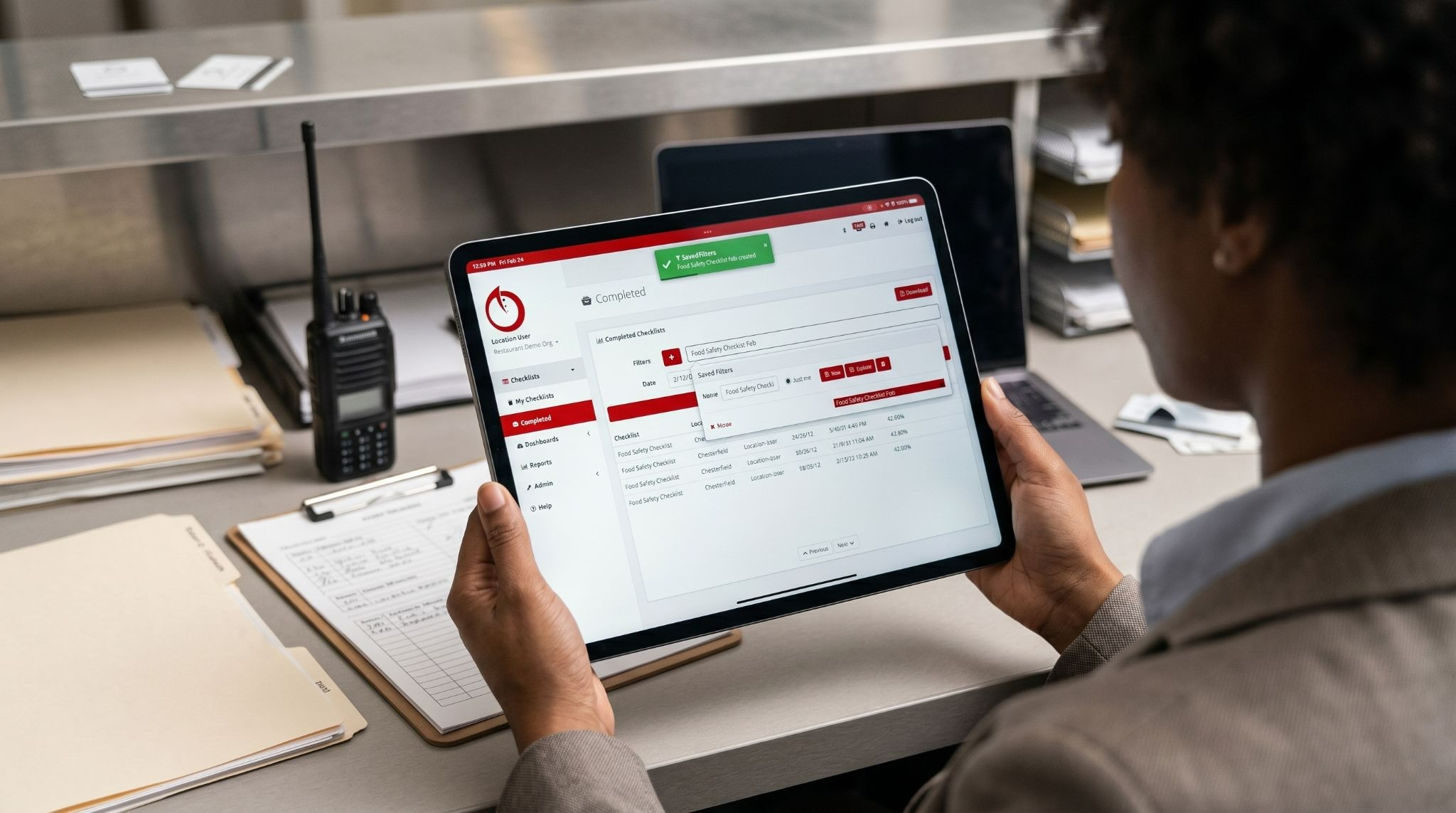
How OpsAnalitica Supports Multi-Unit Growth
OpsAnalitica is an operations execution platform designed for process-driven workflows and real-time data capture. Users report 3 to 4 percent labor cost reductions and weekly savings of approximately $5,000 through improved time management. By replacing confusion with clear action, the platform enables accountability without micromanagement. Real-time visibility allows leadership to address issues early and replicate success across locations.
The Hidden Cost of Growth: Why Process Debt Can Kill Expanding Businesses
Building the Blueprint: What Needs to Be in Place Before You Scale
If you're planning to grow, the time to get your operations in order is before you open the next location. That means documenting what works at your current site with enough detail that a new team could follow it independently.
Achieving operational consistency across multi-unit operations doesn't happen by sending out a manual and hoping people read it. It requires a system that guides behavior in the moment, at the point of task execution, and records what was done and when.
Here's what a solid operational foundation looks like before you scale:
- Documented processes for every recurring task, including who owns it and what "done" looks like
- A digital method for assigning, tracking, and verifying task completion across sites
- Real-time performance data accessible to leadership without requiring manual reporting
- A feedback loop that surfaces problems early and routes them to the right person
- Training that's tied to the actual tasks employees are expected to perform
The companies that nail this don't just grow faster. They grow in a way that's actually sustainable.

The Role of Standardized Processes in Preventing Growth-Stage Failures
Most expansion-stage failures don't come from bad products or bad markets. They come from operational breakdowns that compound over time. A new location opens with incomplete training, quality dips, and by the time leadership notices, the fix costs more than the original investment.
The research on standardized processes in multi-location businesses shows that operators who standardize before they scale avoid most of these failure modes entirely. When everyone's working from the same playbook, and that playbook is enforced through a system rather than verbal reminders, the margin for error shrinks significantly.
OpsAnalitica addresses this directly through its location-aware task lists, micro-training capabilities, and process randomization features. Randomizing task order can reduce time-on-task by up to 30 percent, which matters when you're managing labor costs across multiple sites simultaneously.
If you're navigating growth and want a more concrete look at what process debt can cost you, the real financial impact of skipping operational infrastructure is worth understanding before you make your next move.

Scaling Right Means Scaling with Systems
Multi-location growth is achievable for almost any business. The ones that do it well treat their operations like something worth designing, not just improvising. Standards don't scale on their own. They need infrastructure behind them.
When your processes are clear, your teams are accountable, and your data is accurate, adding locations becomes a matter of execution, not improvisation. That's the blueprint. And the businesses that follow it are the ones still growing five locations down the road.
Ready to Improve Your Operations?
Get our FREE checklists to streamline processes, boost efficiency, and save time.