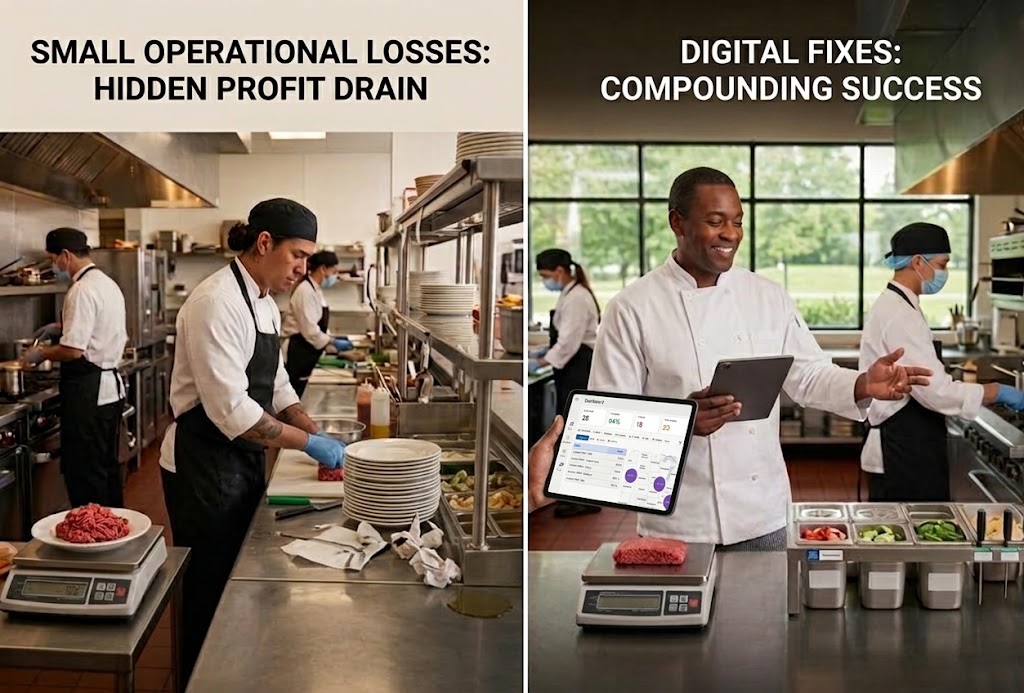
Why Poor Processes Increase Controllable Expenses and How to Fix It
Are broken or inefficient processes quietly draining your budget every single day?

Every multi-unit operator knows the frustration of watching costs climb without a clear reason. You've got solid staff and decent traffic, yet the numbers don't add up. The culprit is often hiding in plain sight: broken or inconsistent processes. When workflows are unclear or ignored, money leaks through labor waste, product loss, and missed standards. The good news is that controllable operating costs are exactly what they sound like, controllable. With the right approach, you can plug those leaks.
Key Takeaways
- Poor processes lead to wasted labor hours, product loss, and inconsistent customer experiences.
- Controllable expenses are costs you can directly influence through better operational practices.
- Identifying process breakdowns requires honest observation and frontline input.
- Three proven fixes include paper-based audits, process mapping, and digital platforms like OpsAnalitica.
- Going digital offers real-time visibility, accountability, and scalable consistency across locations.
What Are Controllable Expenses?
Controllable expenses are costs your management team can directly impact through daily decisions. Think labor hours, food waste, supplies usage, and utility consumption. Unlike fixed costs like rent or insurance, these expenses shift based on how well your operations run. A restaurant that over-schedules staff during slow periods or tosses spoiled inventory due to poor rotation is bleeding controllable dollars.
When processes fail, controllable expenses balloon. Employees take longer to complete tasks because instructions are unclear. Mistakes lead to rework or refunds. Products spoil because logs weren't checked. Guest complaints spike because quality varies shift to shift. All of this costs money, and none of it has to happen.
How Poor Processes Drive Up Costs
Process inefficiencies don't always look dramatic. They show up as small daily failures that compound over time:
1. Labor Waste When employees don't have clear guidance, they improvise. Some work slowly because they're unsure of correct steps. Others redo tasks because they weren't done right the first time. Managers spend hours putting out fires instead of improving systems.
2. Product and Inventory Loss Without consistent processes for receiving, storing, and rotating stock, spoilage and shrinkage increase. A missed temperature check can ruin an entire cooler of product. Poor receiving procedures let vendors short deliveries unnoticed.
3. Inconsistent Customer Experience Guests notice when quality varies. One location nails brand standards while another falls short. That inconsistency damages your reputation and drives customers to competitors.
Related: How to Turn Compliance From a Headache Into a Competitive Advantage
4. Compliance Risks Health inspections, safety audits, and brand standards reviews all require documentation. When processes are loose or paper-based systems get lost, you're exposed. Fines, failed audits, and even shutdowns can result from missing or incomplete records.

Spotting Process Breakdowns in Your Operation
Before you can fix anything, you need to see where the problems live. Walk your locations with fresh eyes. Watch how tasks actually get done versus how they're supposed to be done. Talk to frontline employees, they often know exactly where things fall apart.
Look for these warning signs:
- Tasks that take much longer at some locations than others
- Frequent questions from staff about basic procedures
- High variance in key metrics like labor percentage or waste across similar units
- Recurring guest complaints about the same issues
Once you identify the gaps, you can start building solutions. The key is documenting your standard operating procedures clearly and making sure everyone follows them.
Three Ways to Fix Poor Processes
Option 1: Paper-Based Audits and Checklists
This is the simplest starting point. Create detailed checklists for every critical task, from opening procedures to closing duties. Print them, distribute them, and require managers to verify completion daily.
The downside? Paper gets lost, compliance is hard to verify remotely, and you have no real-time visibility. It also doesn't scale well beyond a handful of units.
Option 2: Process Mapping and Training Overhauls
Take a deeper look at your workflows. Map out each process step by step, identify bottlenecks, and redesign for efficiency. Then retrain your teams on the new standards.
The challenge is sustainability. Without ongoing reinforcement, teams drift back to old habits. Training alone doesn't create accountability.
Related: From One Store to a Hundred: The Checklist Framework That Scales With You
Option 3: Go Digital with a Platform Like OpsAnalitica
For operators serious about controlling costs at scale, digital tools offer the most impact. OpsAnalitica is a digital task management platform built for multi-unit businesses. It replaces paper checklists with intelligent digital processes that hold teams accountable to your standards every day.
With OpsAnalitica, you get real-time visibility into task completion across all locations. Managers can track compliance, spot issues early, and coach teams based on actual data. The platform supports micro-training, location-aware task lists, and randomization features that reduce task time by up to 30%. Clients report labor cost reductions of 3 to 4 percent and weekly savings of $5,000 from improved time management.
For restaurant operations management, the platform handles everything from food safety logs to shift checklists, giving operators confidence that standards are met even when they're not on-site.

Why Going Digital Makes the Biggest Difference
Paper systems and one-time training can help, but they don't create lasting change. Digital platforms like OpsAnalitica build accountability into your daily operations. Every task is tracked, every completion is logged, and every exception is flagged. That visibility drives behavior change in ways paper never can.
You also gain the ability to scale. Opening new locations doesn't mean starting from scratch with training binders. Your processes live in the platform, ready to deploy anywhere. Consistency becomes built-in, not hoped for.
Ready to take control of your controllable expenses? See how OpsAnalitica's operations execution solution can transform your workflows.
Conclusion
Poor processes don't announce themselves. They quietly drain your budget through wasted labor, lost product, and inconsistent guest experiences. The costs are real, but so is your ability to fix them. Whether you start with paper checklists, invest in process mapping, or go digital with an operations execution solution, the important thing is to start.

Ready to Improve Your Operations?
Get our FREE checklists to streamline processes, boost efficiency, and save time.