"The Walk-Through That Never Happened": How Restaurants Are Using AI Photo Verification to Catch What Managers Miss
Protect margins and enforce brand standards with AI photo proof technology.

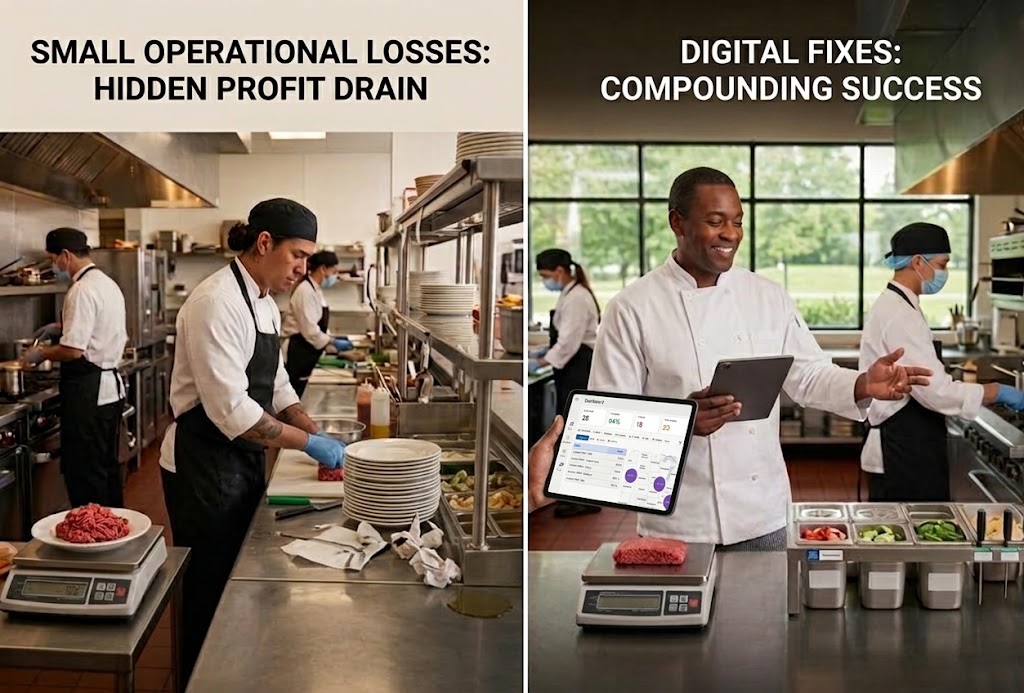
Every shift is supposed to start and end the same way. A manager walks the line, checks the cooler temps, glances at the prep station, and signs off on the closing checklist. On paper, it happened. On the floor, it's sometimes a different story.
Talk to any multi-unit operator and they'll admit it off the record. The walk-through that gets logged and the walk-through that actually happens aren't always the same event. A closing manager juggling a short-staffed shift signs off on a checklist from memory. A busy GM marks a food safety log complete without opening the walk-in. None of this is malicious. It's just what happens when compliance depends on someone finding five extra minutes during the busiest part of the day.
That gap between "checked" and "verified" is what actually costs restaurant brands money and reputation. It's also the gap AI photo verification was built to close.
The Problem With Self-Reported Checklists
Paper logs and basic digital checklists rely almost entirely on trust. A box gets checked, a signature gets added, and leadership assumes the task was done to standard. There's no easy way to confirm the cooler was actually at temp, the line was actually reset, or this week's promo signage was actually installed correctly. Not without a district manager physically driving to the store to check.
This is where most brands get caught off guard. It's rarely the tasks that never get touched at all. It's the tasks that get "pencil whipped," checked off quickly without the work behind them holding up, that quietly erode food safety compliance, brand standards, and guest experience across dozens or hundreds of locations at once.
The FDA Food Code provides a model that state and local regulators use as the basis for their own food safety rules, covering things like cold-holding temperatures and sanitation procedures. Meeting those standards on paper and actually meeting them on the line are two different things, and that's the distinction managers are up against every shift.
Where OpsAnalitica Fits In
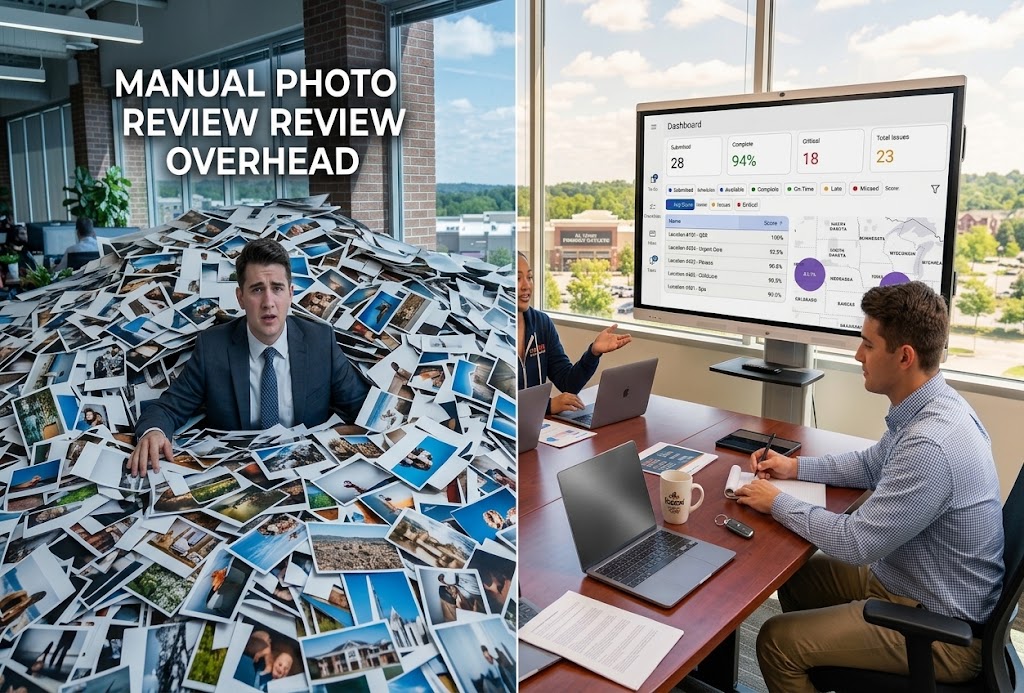
The OpsAnalitica Platform was built to close exactly this gap. Instead of asking frontline teams to self-report and hoping the data holds up, OpsAnalitica turns everyday shift checklists into a system for verifying execution. It pairs structured, location-adaptive workflows with OpsPhotoAnalyzer AI, which reviews photo submissions and flags issues in real time.
This is what operations execution looks like in practice. It's not just assigning tasks and hoping they get done. It's making sure they're actually completed to standard, with the data to prove it, which is how a brand moves toward real Ops Excellence instead of just having a checklist app.
To be clear, this isn't a scheduling tool. OpsAnalitica doesn't build shift schedules. It verifies that the operational work already scheduled to happen actually happened, and happened correctly.
What AI Photo Verification Actually Catches
Instead of a manager eyeballing a photo, or skipping the review altogether during a rush, OpsPhotoAnalyzer AI reviews submitted images against your brand's standards as they're uploaded. That means it can help flag things like:
- A cooler photo that's blurry, outdated, or reused from a previous shift
- A prep line that's missing required PPE or set up incorrectly
- Promotional signage for a new LTO that wasn't installed correctly on launch day
- Cleanliness or food safety gaps that would otherwise go unnoticed until a health inspector, or a customer, finds them first
Rather than a district manager scrolling through hundreds of photos across a portfolio every week, the AI can handle the initial review and flag images that may need a closer look. For restaurant operators managing multiple locations, that's the difference between reacting to a problem after a bad review or a failed inspection and catching it during the shift it happened.
Why This Matters Beyond the Kitchen
Verified execution doesn't just protect food safety compliance. It protects the P&L. Inconsistent execution across locations shows up as uneven guest experience, wasted labor hours redoing missed tasks, and compliance risk that can turn into fines or worse.
Real-time visibility into store-level performance also means gaps get caught before they compound into bigger, more expensive ones. And because accurate operational data feeds into more than just compliance, it can support revenue-related processes like calculation and billing too, giving operators more reliable numbers to work from instead of guesswork pulled together after the fact.
Curious what that looks like for your own locations? Schedule a demo to see how OpsPhotoAnalyzer AI reviews photo submissions and flags issues in real time.
Start With Your Own Walk-Through
You don't need to overhaul your entire operation to see where the gaps are. A good starting point is a simple, structured checklist for the tasks that matter most, like food safety, opening and closing procedures, and line checks, paired with an honest look at whether those tasks are actually being verified or just checked off.
FAQs
Is AI photo verification only useful for large restaurant chains? No. It's built to scale from a handful of locations to hundreds, but even a single multi-shift restaurant benefits from having photo proof of food safety and line checks instead of relying on memory.
Does this replace my managers or district audits? No. It handles the routine, repetitive review work so managers and district leaders can focus their time on the locations and issues that actually need attention, instead of scrolling through every photo manually.
What happens when a photo doesn't meet standard? The system flags it in real time so the issue can be corrected during the shift, rather than surfacing days later in a report or, worse, during a health inspection.
Ready to Improve Your Operations?
Get our FREE checklists to streamline processes, boost efficiency, and save time.