Nov 7, 2025
The Hidden Cost of Growth: Why Process Debt Can Kill Expanding Businesses
-

When businesses expand, most owners obsess over revenue targets and market share. But there's a quieter threat building up: process debt. It's what happens when workflows and operations can't keep up with expansion. Every outdated checklist, every manual workaround, every "we'll fix this later" decision piles up until your operation starts cracking.
For multi-unit operators in restaurants, retail, and hospitality, this invisible liability can turn profitable growth into disaster.
Key Takeaways
- Process debt accumulates when businesses rely on outdated, manual workflows that don't scale with growth.
- Signs include rising labor costs, compliance gaps, inconsistent quality, and frustrated managers juggling too many tasks.
- Manual checklists and spreadsheets create bottlenecks that drain productivity and increase error rates across locations.
- Digital operations platforms can reduce labor costs by 3-4% and cut task completion time by up to 30%.
- Addressing process debt early protects brand reputation and prevents expensive fixes down the road.
What Process Debt Actually Means
Think of process debt like financial debt, except instead of owing money, you're accumulating inefficiency. Every time you choose a quick fix over a proper solution, you're borrowing against your future operations. Maybe you launch a new location using paper checklists because that's what worked at your first store. Or you ask managers to manage tasks in Excel spreadsheets instead of investing in real operational tools.
These shortcuts feel harmless at first. But as you add more locations, those manual processes multiply. What took one manager 30 minutes now takes five managers two hours each. Tasks get skipped. Standards drift. Before long, your expansion is being held back by the very systems you thought were helping you grow.
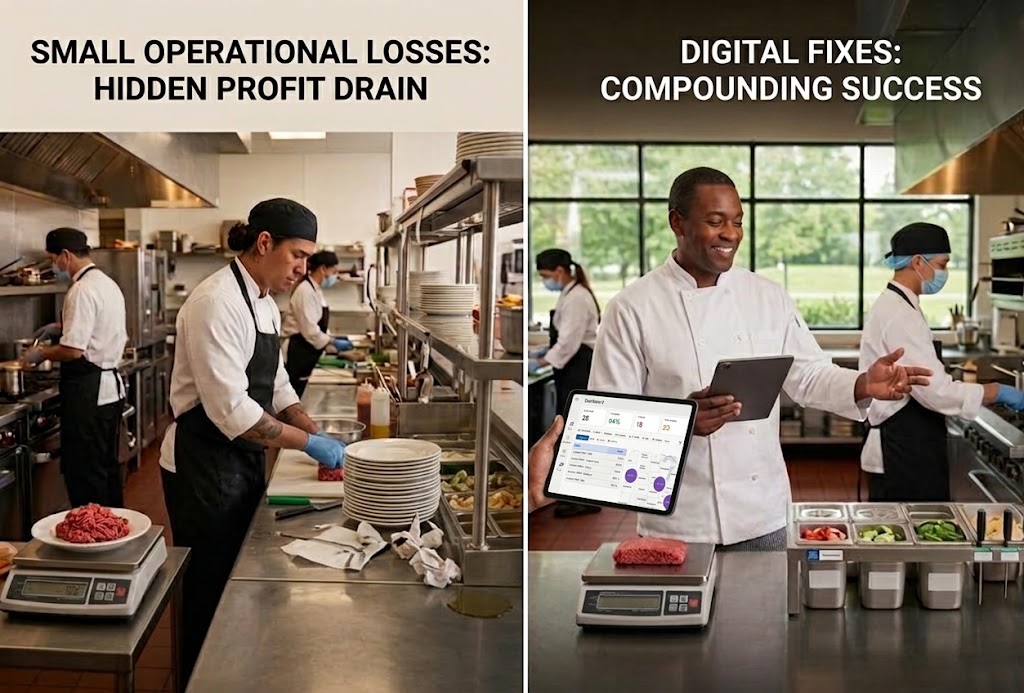
Multi-unit operators are tackling this challenge by digitizing their operations with platforms like OpsAnalitica, which replaces paper checklists and manual workflows with intelligent digital processes that reduce labor costs by 3-4% while ensuring consistency across all locations.
How Process Debt Kills Growing Businesses
Labor costs spiral out of control. When processes don't scale, you throw more labor at the problem. Managers spend hours on paperwork, data entry errors pile up, and teams waste time hunting for information. Operations that could run smoothly require constant oversight.
The math is brutal. If each manager wastes two hours daily on inefficient processes, that's 10 hours weekly per location. Across 10 locations, you're bleeding 500 hours monthly. At $25 per hour, that's $12,500 in wasted business labor costs monthly.
Related: Dealing With High Labor Costs in Restaurants: What to Do

Quality and compliance take a hit. Paper checklists don't enforce accountability. Managers check boxes without completing tasks. Audits happen sporadically. When locations run on different processes, maintaining brand standards becomes impossible.
Consequences show up in customer reviews, health inspections, and your bottom line. Poor customer experiences directly impact business revenue, with studies showing negative reviews cost businesses thousands in lost sales. Process debt creates blind spots where problems fester.
Expansion becomes impossible. The thing that helped you open your first locations becomes the barrier preventing you from opening more. When operations depend on heroic effort from managers rather than reliable systems, you can't scale. New locations struggle without a clear playbook.
Multi-unit operators hit a wall where adding locations decreases profitability because operational overhead grows faster than revenue.
Related: Top 5 Core Principles of Operational Excellence?
Why You Don't Notice It Building Up
Process debt accumulates gradually. You don't wake up one day with a broken operation. Instead, small inefficiencies compound over months and years.
It starts with growth pressure. You're opening locations quickly without time to build proper systems. Managers develop workarounds, creating shadow processes outside official procedures. Communication breaks down. Best practices stay locked in individual managers' heads.
Meanwhile, your team grows accustomed to inefficiency. "This is just how we do things" becomes the rallying cry of process debt.
Three Ways to Tackle Process Debt
Getting ahead of process debt requires deliberate action. Here are three approaches that actually work for multi-unit operators.
1. Standardize Your Core Processes
Start by documenting what works at your highest-performing locations. Not what the manual says should happen, but what really works. Map out critical workflows from opening to closing procedures.
Then ruthlessly simplify. Cut steps that don't add value. Create clear, repeatable processes any manager can follow. The goal is operational excellence through consistency, not complexity.
Document everything digitally. When processes live in someone's head or paper binders, they become outdated immediately.
2. Use Smart Task Management
Moving from paper to digital checklists is a step up, but basic Excel trackers or generic to-do lists don't solve the core problem.
Location-aware task management that adapts to each site works better. Tasks get assigned based on role, shift, and location requirements. Managers gain visibility into what's completed and what's falling through the cracks. The key is making it easier to do the right thing than skip it.

3. Go Digital with Operations Platforms
This is where multi-unit operators see the biggest impact on labor savings. Purpose-built platforms designed for multi-location businesses can eliminate process debt at the root.
These systems replace paper checklists and fragmented tools with centralized operations management. Managers get location-specific task lists that update in real time. Leadership sees exactly what's happening across all locations. Compliance tracking becomes automatic. Teams complete tasks faster because the system guides them through each step correctly.
The labor savings are significant and measurable. Organizations using digital operations platforms report labor cost reductions of 3-4%, weekly savings of $5,000 from improved time management, and 90% higher customer satisfaction. Task completion times drop by up to 30% through features like randomization and micro-training.
For restaurants and multi-unit operators, OpsAnalitica offers a free version of their operations app to help businesses get started with digital checklists and task management without upfront investment.
Discover how digital operations solutions can help you eliminate process debt and scale profitability.
The Bottom Line
Process debt costs you money daily through wasted labor, compliance failures, and lost revenue. The businesses that scale successfully recognize it early and tackle it head-on.
Start by standardizing core processes. Move beyond spreadsheets to smart task management. When ready for real transformation, invest in digital operations platforms built for multi-unit businesses.
Don't let process debt stop your growth.
Ready to Improve Your Operations?
Get our FREE checklists to streamline processes, boost efficiency, and save time.